
Tooth Pain When Eating: Causes & What to Do
Quick Answer
Why do I feel tooth pain when eating?
Tooth pain when eating often points to an underlying dental problem such as a cracked tooth, gum recession, cavities, or gum disease. While the discomfort may start mildly, it can worsen without proper dental care.
Key Takeaways
- Tooth pain when chewing may signal a cracked tooth or worn filling.
- Tooth pain when eating sweets often relates to sensitive teeth or decay.
- Gum recession and receding gums expose roots and increase sensitivity.
- Teeth grinding can weaken enamel and cause pain under pressure.
- Early treatment options help protect long-term oral health.
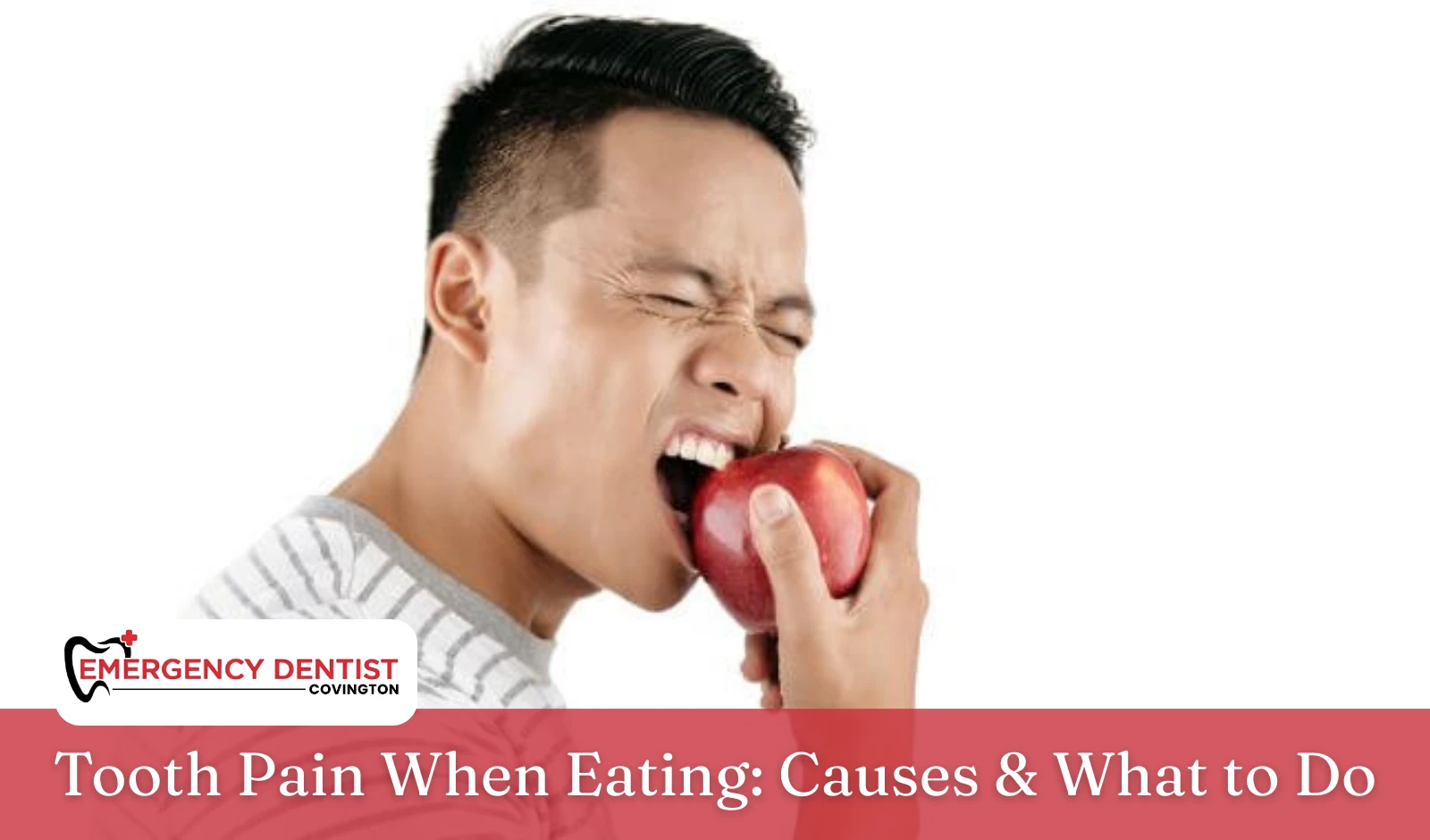
Feeling discomfort while you eat can quickly turn meals into a stressful experience. Tooth pain when chewing, tooth pain when eating sweets, or sudden sensitivity to temperature changes usually means something is wrong beneath the surface.
The good news is that most causes can be treated effectively once identified. The key is recognizing symptoms early and seeking professional dental care before the problem becomes more serious.
Common Causes of Tooth Pain When Eating
1. Pain While Chewing
If your teeth hurt when you bite down, pressure is likely triggering an issue inside the tooth. This type of tooth pain when chewing may result from:
- A cracked tooth that exposes inner layers
- A worn filling that no longer seals properly
- Hidden decay beneath an old restoration
- Teeth grinding that stresses enamel
- Infection near the tooth root
A cracked tooth may not always be visible, but it can cause sharp pain when pressure is applied. Likewise, if you grind your teeth at night, tiny fractures can develop over time.
2. Tooth Pain When Eating Sweets
If you notice tooth pain when eating sweets, sugar may be reaching sensitive areas inside your tooth. This commonly happens because of:
- Cavities that allow sugar to irritate nerves
- Gum recession exposing the tooth root
- Enamel wear from acidic foods
- Receding gums linked to gum disease
When enamel thins, teeth become more reactive to hot, cold, and sugary foods. Sensitive teeth are often the first sign that protective enamel is wearing down.
3. Sensitivity to Hot or Cold
Pain triggered by hot coffee or cold water may suggest:
- Gum recession
- Worn enamel
- Aggressive brushing with a hard toothbrush
- Early-stage gum disease
Switching to a soft bristle toothbrush and using fluoride toothpaste can help strengthen enamel and reduce irritation.
How Gum Issues Contribute to Pain
Gum disease does more than affect your gums. As gum recession progresses, the protective gum tissue pulls away from the teeth. This exposes the roots, which do not have the same enamel protection.
Receding gums increase the risk of infection, root decay, and ongoing sensitivity. If left untreated, gum disease can damage bone and compromise overall oral health.
Why You Should Not Ignore the Pain
Even mild discomfort while eating can signal a larger dental problem. Ignoring symptoms may lead to:
- Worsening infection
- Spread of bacteria to nearby teeth
- Increased sensitivity
- More extensive treatment options later
Early care protects both your smile and your budget.
When to See an Emergency Dentist in Covington
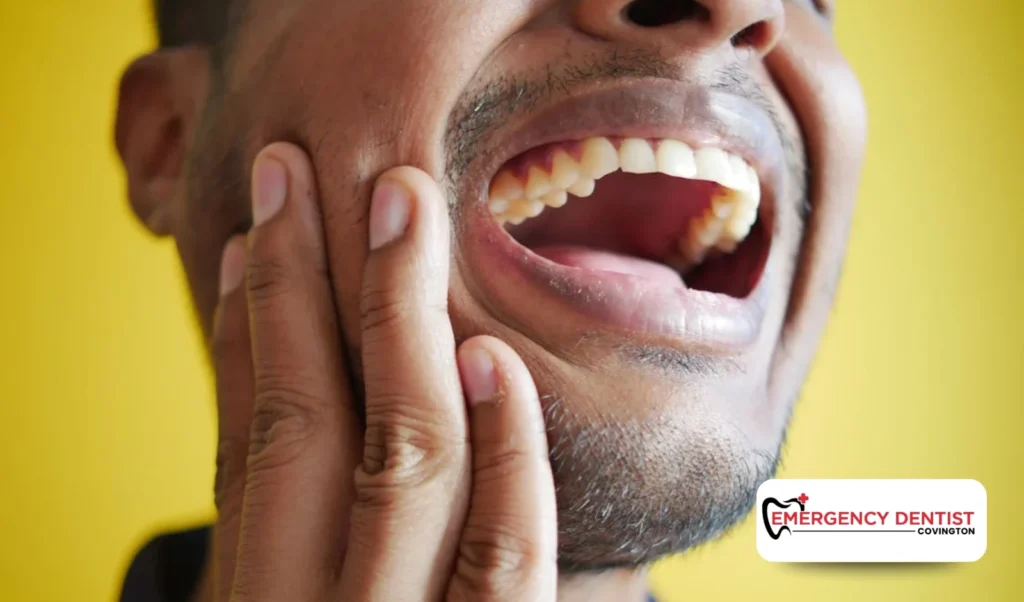
Contact an Emergency Dentist in Covington if you experience:
- Persistent tooth pain when eating
- Swelling in the jaw or gums
- A cracked tooth that hurts under pressure
- Bleeding or discharge around a tooth
- Pain severe enough to interrupt sleep
Prompt evaluation prevents complications and speeds relief.
Diagnosis and Treatment Options
During your visit, your dentist may:
- Examine teeth and gums carefully
- Take X-rays to detect hidden damage
- Perform sensitivity testing
Based on findings, treatment options may include:
- Dental bonding to repair minor cracks
- Replacement of a worn filling
- Crowns to restore damaged teeth
- Fluoride treatments to strengthen enamel
- Root canal therapy if infection is present
- Therapy for gum disease
- A night guard if you grind your teeth
For patients with sensitive teeth, desensitizing toothpaste and fluoride treatments may significantly reduce discomfort.
Temporary Relief at Home
While waiting for your appointment, you can manage symptoms by:
- Rinsing with warm saltwater
- Taking over-the-counter pain relievers
- Avoiding hot, cold, or sugary foods
- Using desensitizing toothpaste
- Switching to a soft bristle toothbrush
- Brushing gently with fluoride toothpaste
These steps provide short-term comfort but do not replace professional dental care.
Prevention Tips for Long-Term Comfort
To reduce the risk of future pain:
- Brush twice daily with fluoride toothpaste
- Use a soft bristle toothbrush
- Limit sugary snacks when you eat sweets
- Wear a night guard if you grind your teeth
- Schedule routine dental visits
- Treat gum disease early
Consistent care strengthens enamel and protects overall oral health.
Final Thoughts
Tooth pain when eating is your body’s warning sign. Whether caused by gum disease, receding gums, sensitive teeth, or structural damage, the solution starts with proper diagnosis. Acting early protects your oral health and helps you enjoy meals comfortably again.
Don’t Let Tooth Pain Disrupt Your Day
Discomfort during meals may seem minor at first, but it is often a warning sign of an underlying dental problem. Whether you are dealing with sensitive teeth, gum recession, or a cracked tooth, early evaluation can prevent the condition from progressing and becoming more complex.
If eating has become uncomfortable, schedule an appointment with an Emergency Dentist in Covington. Prompt care helps preserve your natural teeth, strengthen your long-term oral health, and restore comfort and confidence to your smile.
Frequently Asked Questions
Why do my teeth hurt when I chew even though I don’t see damage?
You may have a small cracked tooth or worn filling that is not visible. A dental exam can identify hidden problems.
Why do I feel tooth pain when eating sweets but not other foods?
Sugar can reach exposed dentin or irritated nerves, especially if you have gum recession or enamel wear.
Could teeth grinding cause pain while eating?
Yes. Teeth grinding weakens enamel and can lead to fractures that cause discomfort under pressure.

ABOUT THE AUTHOR
Dr. Taylor Nielsen, DMD
Co-Founder of Emergency Dentist Atlanta, Covington, & More
Dr. Taylor Nielsen, DMD, earned his dental degree from Oregon Health & Science University after graduating with honors from Brigham Young University–Idaho. With over 1,000 hours of volunteer dental service, he is committed to providing high-quality, comfortable, and personalized care for every patient.