

Quick Answer
Can clove oil for tooth pain actually stop a toothache?
Clove oil can provide temporary relief from toothache pain because it contains a natural numbing agent. However, it does not treat the underlying dental problem causing the pain.
Key Takeaways
- Clove oil for tooth pain offers short-term pain relief.
- Its active ingredient, eugenol, has antibacterial properties and anti-inflammatory properties.
- Always dilute drops of clove oil with a carrier oil such as coconut or olive oil.
- Home remedies for toothache do not replace professional dental care.
- Ongoing toothache pain needs evaluation by a dentist.
Toothache can appear without warning. It may start late at night or during a busy day when you cannot see a dentist right away. Because of this, many people look for home remedies for toothache, including clove oil for toothache. But does clove oil really work, and how should you use it safely?
Let’s take a closer look at how clove and tooth pain are connected and why this natural option is often used for quick comfort.
Why People Use Cloves for Tooth Pain

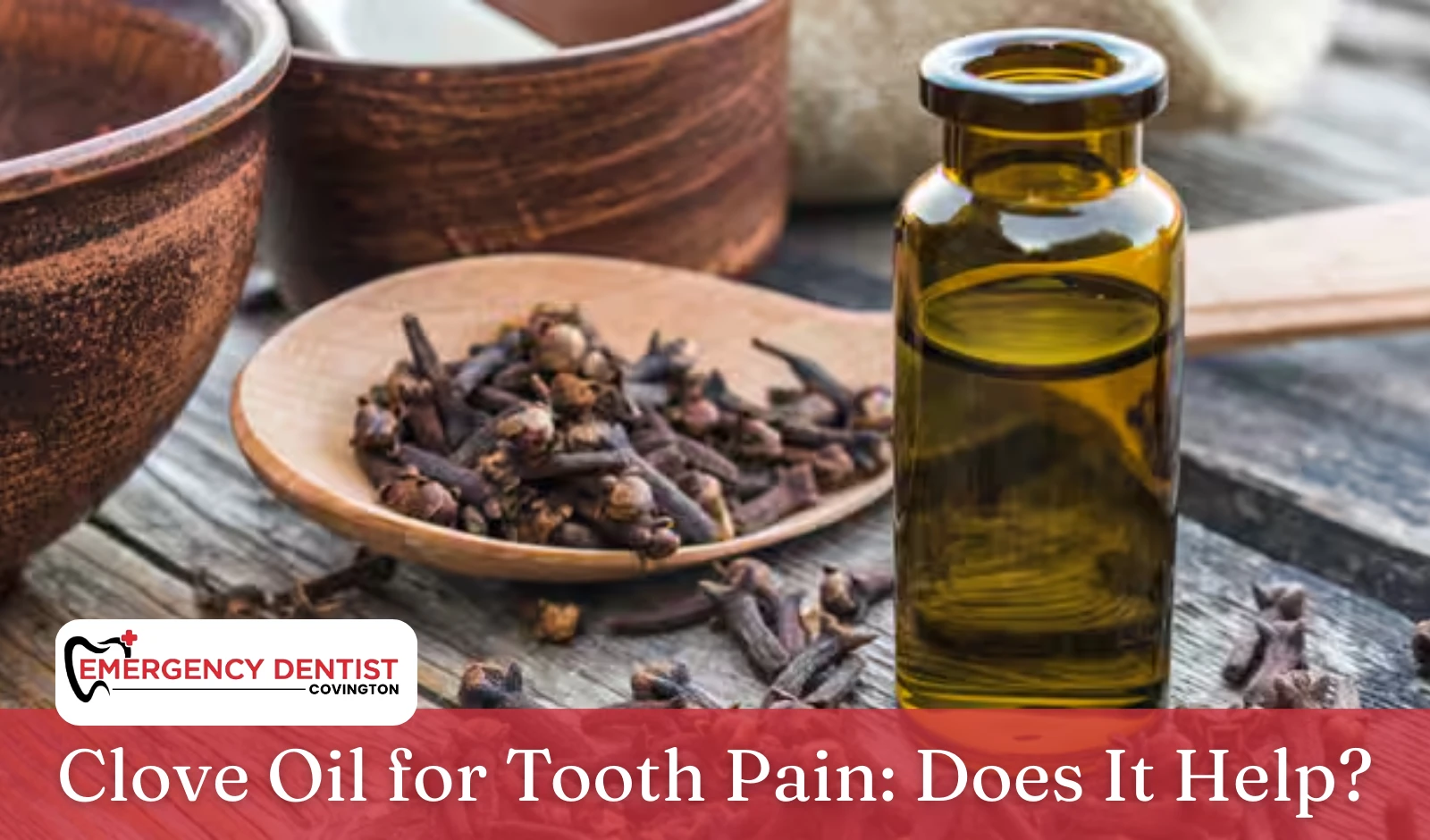
Cloves for tooth pain have been used for many years in traditional oral health practices. The reason clove for tooth pain is popular comes down to one powerful active ingredient called eugenol.
Eugenol gives clove oil its pain relieving and soothing effects. It works in several ways:
- Creates a mild numbing feeling on the affected area
- Fights bacteria thanks to its antibacterial properties
- Supports healing with anti inflammatory properties
Because of these benefits, clove tooth pain remedies are often compared to over-the-counter gels. Still, it is important to remember that this solution only helps relieve tooth pain temporarily.
Clove Oil Tooth Pain: How to Use It Safely
If you are wondering about clove oil tooth pain and how to use methods, safety is very important. Using too much or applying it directly without dilution can irritate your gums.
Here is a simple guide:
What you need:
- A small amount of pure clove oil
- A carrier oil such as coconut or olive oil
- A cotton swab or cotton ball
- Warm water
Steps:
- Mix two or three drops of clove oil with one teaspoon of carrier oil such as coconut or olive oil.
- Dip the cotton swab into the mixture.
- Gently place it on the affected tooth or along the surrounding gum.
- Leave it in place for a few minutes.
- Remove it and rinse your mouth with warm water.
This method allows the oil to target the affected area while lowering the risk of irritation.
Possible Side Effects

Although clove oil is natural, it can still cause side effects if misused. Some people may notice:
- Gum irritation
- A burning feeling
- Allergic reactions
- Tissue damage if used without dilution
Swallowing clove oil in large amounts is not recommended. Always use only a small amount and avoid direct contact with sensitive tissues for long periods.
When Pain Needs Professional Care
Clove oil can help relieve tooth pain for a short time, but it will not fix cavities, infections, or cracks in the affected tooth. If your toothache pain is severe, throbbing, or comes with swelling or fever, you need professional treatment.
Ignoring symptoms may allow the problem to worsen and affect your overall oral health.
Don’t Wait for the Pain to Worsen
If your discomfort continues after trying clove oil for tooth pain, it may be time to seek expert care. Emergency Dental Covington provides urgent treatment for toothaches, infections, and other serious dental problems.
Prompt evaluation can protect your smile and stop pain at its source. Reach out today to schedule an appointment and get the relief you deserve.
Frequently Asked Questions
Can I put whole cloves on my sore tooth?
Yes, some people place whole cloves on the affected tooth, but clove oil works faster and more effectively.
Is clove oil safe for daily use?
It should only be used for short-term pain relief. Long-term use without seeing a dentist is not advised.
Why does my tooth still hurt after using clove oil?
Clove oil only numbs the area. If the pain continues, there may be decay or infection that needs dental treatment.